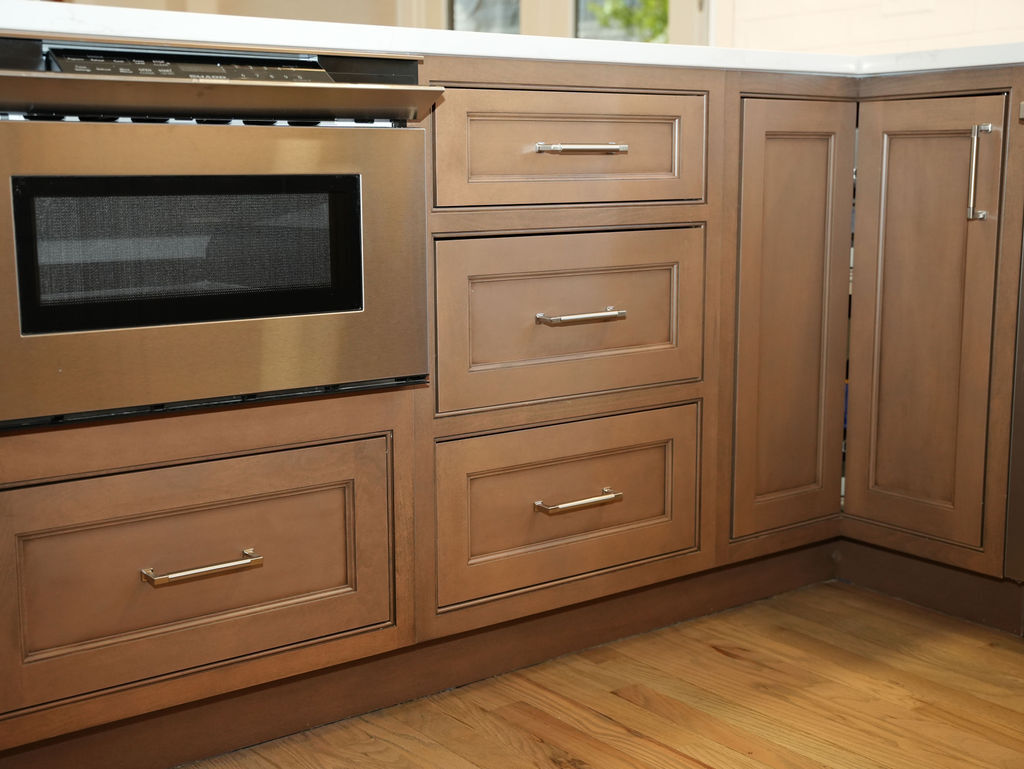
Cabinetry is one of the biggest decisions in a kitchen remodel — it affects the budget, timeline, functionality, and overall look of the finished space. Choosing between semi-custom and fully custom cabinetry is often where that decision begins.
The difference isn't only about cabinet dimensions. Semi-custom cabinetry gives homeowners a defined selection of sizes, door styles, colors, and stains within a manufacturer's product line. Fully custom cabinetry provides significantly greater design freedom, including a wide selection of wood species, stains, painted finishes, door styles, and custom configurations.
This guide explains the key differences so you can determine which option makes the most sense for your kitchen, design goals, and budget. CASA Kitchen & Bath serves homeowners in Naperville, Oak Brook, and the surrounding Chicagoland suburbs.
What Semi-Custom Cabinetry Means
Semi-custom cabinets are built using a manufacturer's standard cabinet sizes and product system, with certain modifications available for widths, heights, storage features, and configurations.
Homeowners can typically choose from a selection of door styles and finishes offered by the manufacturer, but the available colors, stains, wood species, and design options are limited to that manufacturer's collection.
This gives homeowners a good balance of design flexibility, quality, cost, and lead time without moving into a fully made-to-order cabinet line.
Semi-custom cabinetry works especially well when the kitchen has a relatively standard footprint and the homeowner can achieve the desired look within the manufacturer's available sizes, colors, stains, and door styles.
What Fully Custom Cabinetry Means
Fully custom cabinetry is built specifically for your kitchen rather than being designed around a predetermined system of standard cabinet sizes and finish options.
Cabinet dimensions and configurations can be tailored to the space, making custom cabinetry especially useful for unusual layouts, non-standard dimensions, specific storage requirements, and highly personalized designs.
The design possibilities are also much broader. Depending on the cabinet manufacturer and project, fully custom cabinetry can offer a wide selection of wood species, custom stains, painted finishes, door styles, decorative details, and design configurations.
This gives homeowners greater freedom to create a specific look rather than choosing only from a predefined collection.
For example, custom cabinetry can provide more flexibility when coordinating a particular wood species and stain, creating a specific painted finish, selecting a distinctive door profile, designing a furniture-style island, incorporating specialized storage, or building cabinetry to fit an unusual architectural condition.
Because each project is built specifically for the space and design, fully custom cabinetry typically requires a longer production process than semi-custom cabinetry.
The Difference Goes Beyond Cabinet Size
One of the biggest misconceptions is that custom cabinetry is simply semi-custom cabinetry made in unusual dimensions.
Sizing is an important difference, but it isn't the only one.
With semi-custom cabinetry, homeowners select from a manufacturer's established collection. There may be multiple door styles and finish options available, but the selection of colors, stains, wood species, and configurations is limited to what that cabinet line offers.
With fully custom cabinetry, the range of possibilities is significantly broader. Homeowners can choose from a wider variety of wood species, stains, painted finishes, door styles, and design configurations while also tailoring cabinet dimensions and details to the space.
For homeowners with a very specific design vision, this additional flexibility can be just as important as the ability to customize cabinet dimensions.
Where the Cost Difference Actually Comes From
The cost difference between semi-custom and fully custom cabinetry comes from several factors.
Custom cabinetry typically requires more design and production time, more individualized fabrication, and materials that are selected and built specifically for the project. Custom dimensions, specialized storage, unique door styles, particular wood species, custom stains or painted finishes, and detailed design configurations can all influence the final price.
Semi-custom cabinetry uses an established manufacturing system with predefined sizes, modifications, door styles, colors, and stains. Because the available choices are standardized, production is generally more efficient and predictable.
The price difference can be significant and depends on kitchen size, manufacturer, materials, finish selections, door styles, construction details, and the overall level of customization.
There isn't one fixed price difference that applies to every kitchen, which is why cabinetry should be evaluated as part of the complete project budget.
Timeline: Custom Cabinetry Typically Takes Longer
Fully custom cabinetry generally has a longer lead time because the cabinetry is being produced specifically for the project, including its dimensions, configurations, materials, door styles, and finish selections.
Semi-custom cabinetry is produced within an established manufacturer's system, which generally makes production more predictable and can result in a shorter lead time.
Cabinetry is an important part of the overall kitchen remodel schedule, so CASA addresses this decision early in the design process. Once the cabinet direction, layout, door style, and finish selections are finalized, ordering can be coordinated with the rest of the project schedule.
When Semi-Custom May Be the Right Fit
Semi-custom cabinetry may be a good option when:
- Your kitchen has a relatively standard layout and footprint
- The manufacturer's available cabinet sizes and modifications work well for your design
- You find a door style and finish you like within the available collection
- You are comfortable choosing from a more limited selection of colors, stains, wood species, and finishes
- A shorter and more predictable production timeline is important
- You want to allocate more of your remodeling budget toward countertops, appliances, lighting, or other parts of the project
- You want quality cabinetry without requiring a completely made-to-order design
Semi-custom doesn't automatically mean lower quality. It primarily means you're designing within a manufacturer's established system rather than creating every cabinet, finish, and detail specifically for your project.
When Fully Custom Is Worth Considering
Fully custom cabinetry may be worth considering when:
- Your kitchen has an unusual layout, angled walls, or non-standard dimensions
- You want cabinetry designed to fit the space as precisely as possible
- You have specific storage or organizational requirements
- You want a particular wood species or stain
- You want a specific painted finish or greater flexibility in color selection
- You want access to a wider variety of door styles and profiles
- Your design requires unique cabinet configurations or built-in features
- You want a furniture-style island, distinctive cabinetry details, or other personalized design elements
- Achieving a specific overall design is more important than minimizing lead time or cabinetry cost
For these projects, the value of custom cabinetry isn't simply that it “fits better.” It's the ability to create cabinetry around the architecture, functionality, and design vision of the kitchen rather than adapting the kitchen to a predetermined cabinet line.
How CASA Helps You Decide
Cabinetry should be selected as part of the overall kitchen design rather than treated as a separate purchase.
During your consultation and design process, CASA reviews your layout, storage needs, design preferences, budget, and timeline to determine whether semi-custom or fully custom cabinetry is the better fit.
We also help you compare the design possibilities — including cabinet configurations, door styles, wood species, stains, painted finishes, and other details — so you understand what you're gaining by moving from semi-custom to fully custom cabinetry.
A 3D concept helps you visualize how the cabinetry works within your actual kitchen before the final design and selections are completed.
Frequently Asked Questions
What is the biggest difference between semi-custom and fully custom cabinetry?
Semi-custom cabinetry is designed within a manufacturer's established system of cabinet sizes, modifications, door styles, colors, stains, and finishes. Fully custom cabinetry provides significantly greater flexibility in dimensions, configurations, wood species, stains, painted finishes, door styles, and design details.
Does semi-custom cabinetry have different colors and stains available?
Yes. Semi-custom cabinetry typically offers multiple colors, stains, and door styles. However, the selection is limited to the options offered within the manufacturer's cabinet line. If you're looking for a very specific stain, painted color, wood species, or door design, fully custom cabinetry generally provides greater flexibility.
Can I choose different wood species with custom cabinetry?
Depending on the custom cabinet manufacturer and project specifications, fully custom cabinetry can offer a broad selection of wood species. This gives homeowners more flexibility to coordinate the natural grain, character, and finish of the cabinetry with the overall kitchen design.
Does custom cabinetry offer more door styles?
Generally, yes. Fully custom cabinetry provides greater flexibility in door styles, profiles, details, and design configurations. Semi-custom cabinetry also offers multiple door styles, but you're choosing from the manufacturer's established collection.
How much more does custom cabinetry cost than semi-custom?
The difference can be significant and depends on kitchen size, manufacturer, wood species, finish, door style, construction details, and level of customization. CASA evaluates cabinetry as part of the overall kitchen scope so you can understand how the choice affects your total project budget.
Does custom cabinetry take longer?
Fully custom cabinetry generally has a longer production lead time because the cabinetry is made specifically for the project. Semi-custom cabinetry is produced within an established manufacturing system and typically has a more predictable production timeline.
Is semi-custom cabinetry lower quality than fully custom cabinetry?
Not necessarily. Semi-custom cabinetry can offer excellent construction and durability. The primary differences are the degree of customization, sizing flexibility, and the range of available materials, colors, stains, door styles, and design configurations — not simply quality.
Can I mix semi-custom and custom cabinetry in the same kitchen?
Depending on the design and cabinet lines being used, it may be possible. For example, semi-custom cabinetry might work well for standard cabinet runs while a custom solution is used for a distinctive island, built-in feature, or unusual architectural condition. CASA evaluates this during the design process to make sure the overall kitchen remains cohesive.
Does CASA work with both semi-custom and fully custom cabinetry?
Yes. CASA Kitchen & Bath helps homeowners compare semi-custom and fully custom cabinetry based on the kitchen layout, design goals, finish preferences, budget, and project timeline as part of our design-build process.
Not Sure Which Cabinetry Is Right for Your Kitchen?
Schedule a complimentary consultation with CASA Kitchen & Bath to explore semi-custom and fully custom cabinetry for your kitchen.
We'll review your layout, storage needs, budget, and design preferences — including door styles, wood species, stains, painted finishes, and cabinet configurations — and help you understand which level of customization makes sense for your project.
CASA serves homeowners in Naperville, Oak Brook, and the surrounding Chicagoland suburbs. You can also visit our showroom at 654 Route 59 in Naperville to explore cabinetry options and start planning your kitchen remodeling project.